Residential vs datacenter vs ISP proxies: which should you use?
The three main proxy types explained in plain English, with a simple way to choose the right one for your project.
ZenProxy team · 30 October 2026 · 1 min read
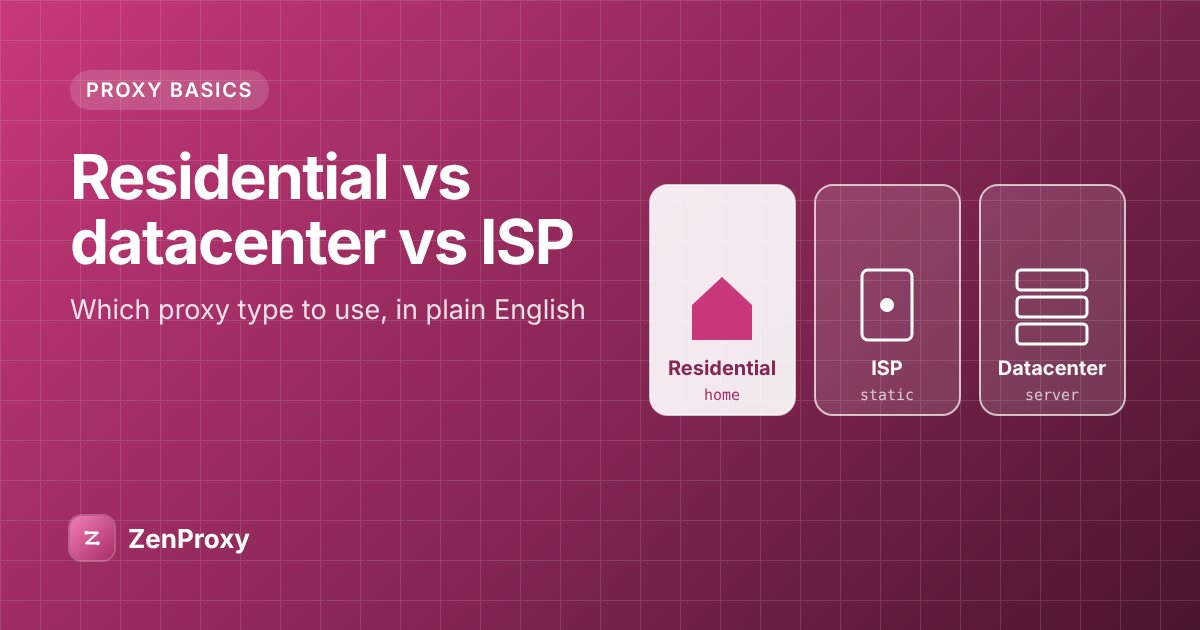
Choosing a proxy type is the first decision on any scraping, monitoring or account project. Pick wrong and you either overpay or get blocked. Here is how the three main types differ.
Residential proxies
Residential proxies send your traffic through real home internet connections. To a website, each request looks like an ordinary visitor on a home broadband or mobile line.
- Best for: sites with strong bot protection, search engines, marketplaces and social platforms
- Billing: usually per GB of data
- Trade-off: slower and more expensive per request than datacenter
Datacenter proxies
Datacenter proxies come from servers in data centres. They are fast and cheap, but websites can tell they belong to hosting companies.
- Best for: high-volume work on sites that don't block datacenter traffic, testing and monitoring
- Billing: per IP or per list
- Trade-off: blocked more often on protected sites
ISP proxies
ISP (or static residential) proxies are registered to internet providers but usually run on servers rather than home connections. You get an IP registered to an internet provider at server speed, and it stays the same for the whole plan.
- Best for: account management, checkouts, anti-detect browser profiles
- Billing: per IP
- Trade-off: fewer locations than residential, no rotation
A quick way to choose
- Try datacenter first if your target is lenient. It's the cheapest.
- If you see CAPTCHAs or 403 errors, move to residential.
- If you need the same IP for weeks (logins, accounts), choose ISP.
Still unsure? Compare every type side by side or ask our team.